
10 Early Signs of Insulin Resistance You Should Never Ignore
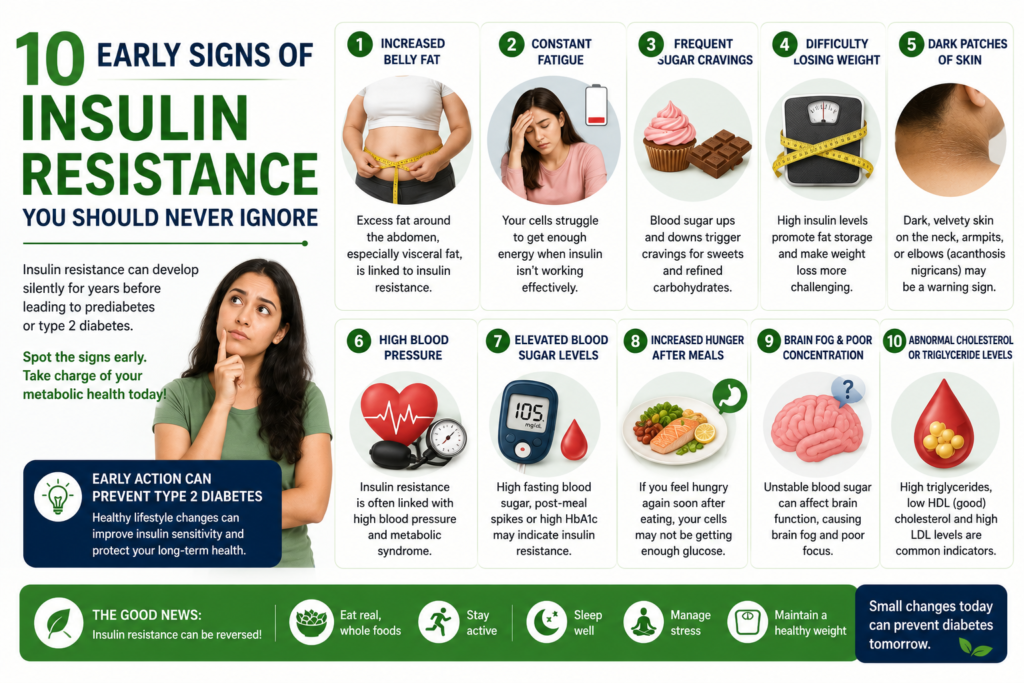
10 Early Signs of Insulin Resistance You Should Never Ignore 10 Early Signs of Insulin Resistance You Should Never Ignore – Insulin resistance is one of the most common yet overlooked health conditions today. It often develops silently over several years before progressing to prediabetes or Type 2 diabetes. The good news is that recognizing the early warning signs gives you the opportunity to make lifestyle changes that can improve your metabolic health and reduce your future risk. In this article, we’ll explore the most common early signs of insulin resistance, why they occur, and what you can do to protect your health. What Is Insulin Resistance? Insulin is a hormone produced by the pancreas that helps move glucose (sugar) from your bloodstream into your body’s cells, where it is used for energy. When your body becomes insulin resistant, your cells don’t respond effectively to insulin. To compensate, your pancreas produces more insulin to keep blood sugar levels under control. Over time, this extra workload can lead to higher blood sugar levels, prediabetes, and eventually Type 2 diabetes if left unmanaged. Why Early Detection Matters – 10 Early Signs of Insulin Resistance You Should Never Ignore Insulin resistance often develops years before diabetes is diagnosed. During this stage, many people experience subtle symptoms that are easy to overlook. Identifying these warning signs early allows you to take preventive action through healthy lifestyle changes, regular monitoring, and professional medical guidance. 1. Increased Belly Fat One of the earliest and most noticeable signs is excess fat around the abdomen. Visceral fat, which surrounds your internal organs, is closely linked to insulin resistance because it releases inflammatory chemicals that interfere with normal insulin function. If your waistline continues to increase despite maintaining your usual routine, it may be worth discussing with your healthcare provider. 2. Constant Fatigue Do you often feel tired even after getting enough sleep? When your cells cannot efficiently absorb glucose, your body struggles to produce the energy it needs. As a result, persistent fatigue and low energy levels are common symptoms of insulin resistance. 3. Frequent Sugar Cravings If you constantly crave sweets, sugary drinks, or refined carbohydrates, your body may be struggling to regulate blood sugar effectively. Rapid fluctuations in blood sugar can trigger hunger soon after eating, making it difficult to stay satisfied between meals. 4. Difficulty Losing Weight Many people with insulin resistance find that losing weight feels unusually difficult despite eating well and exercising regularly. Higher insulin levels encourage the body to store fat, particularly around the abdomen, making weight loss more challenging. 5. Dark Patches of Skin Dark, thickened, velvety skin around the neck, armpits, elbows, or knuckles may be a condition called acanthosis nigricans. This skin change is commonly associated with elevated insulin levels and should be evaluated by a healthcare professional. 6. High Blood Pressure Insulin resistance often occurs alongside high blood pressure. When combined with increased belly fat, elevated blood sugar, and abnormal cholesterol levels, it may be part of a condition known as metabolic syndrome, which increases the risk of heart disease and Type 2 diabetes. 7. Elevated Blood Sugar Levels Routine health check-ups may reveal: Even slightly elevated values may indicate that your body is becoming less responsive to insulin. 8. Increased Hunger After Meals Feeling hungry shortly after eating a full meal may indicate that glucose is not entering your cells efficiently. Although your blood contains enough glucose, your cells are unable to use it effectively, causing your brain to signal hunger again. 9. Brain Fog and Poor Concentration Difficulty concentrating, forgetfulness, or feeling mentally sluggish can sometimes be linked to unstable blood sugar levels. Many people describe this as “brain fog,” especially after consuming high-sugar meals. 10. Abnormal Cholesterol or Triglyceride Levels Insulin resistance often affects more than blood sugar. Blood tests may show: These changes increase the risk of cardiovascular disease and often accompany insulin resistance. Who Is at Higher Risk? You may have a greater chance of developing insulin resistance if you: Having one or more risk factors doesn’t necessarily mean you have insulin resistance, but it highlights the importance of regular health check-ups. How Can You Improve Insulin Sensitivity? The encouraging news is that insulin resistance often responds well to healthy lifestyle changes. Eat a Balanced Diet Focus on: Reduce your intake of sugary drinks, refined carbohydrates, processed snacks, and foods high in added sugars. Exercise Regularly Physical activity helps your muscles use glucose more efficiently. Aim for at least 150 minutes of moderate-intensity exercise each week, along with strength training exercises two to three times weekly. Prioritize Sleep Adults should aim for 7–9 hours of quality sleep every night. Poor sleep is associated with increased insulin resistance, weight gain, and higher blood sugar levels. Manage Stress Chronic stress increases cortisol, a hormone that may contribute to higher blood sugar and abdominal fat. Simple practices like meditation, yoga, deep breathing, and mindfulness can support both mental and metabolic health. Maintain a Healthy Weight Even a modest weight loss of 5–10% of body weight can improve insulin sensitivity in many individuals with overweight or obesity. When Should You See a Doctor? If you notice several of these warning signs or have risk factors for diabetes, speak with your healthcare provider. They may recommend tests such as: